


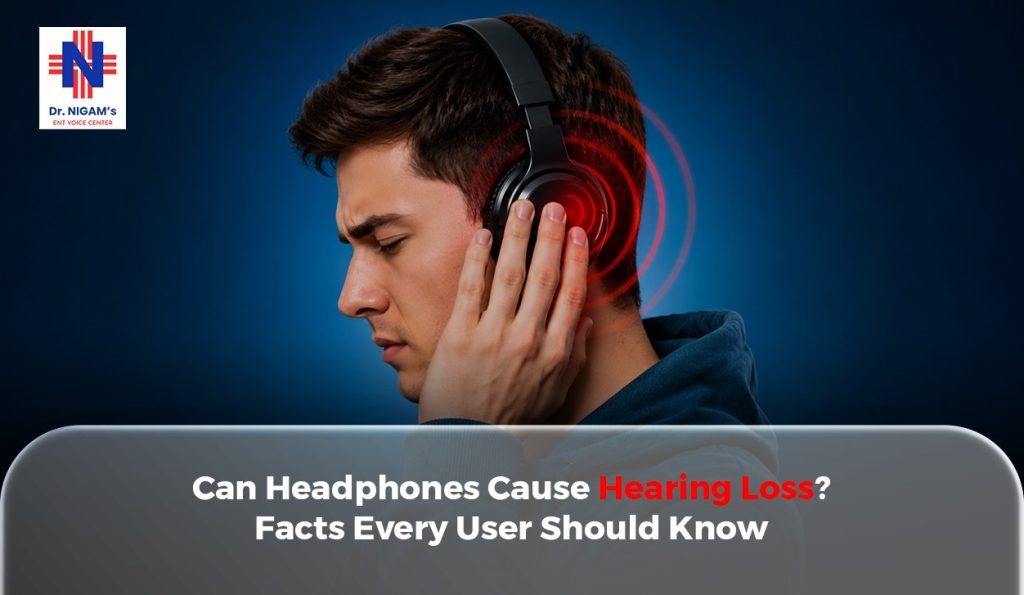
Whether it’s listening to music, having a call, going to online lessons, or watching videos, headphones are a necessity for millions of people every day. If you ever experienced tired ears or experiencing problems hearing clearly after many hours of headphones, you may be wondering, do headphones cause hearing loss?
Yes, if they aren’t used properly. Fortunately, it is possible to avoid hearing damage with headphones, as long as you practice good ear health and receive expert advice when necessary.
How Headphones Can Damage Your Hearing
Play-back induced hearing loss occurs when loud noises over-exert the sensitive hair cells of the inner ear (cochlea). These cells take the sound waves and turn them into electrical energy that your brain can interpret. Sadly, if they are harmed by too much noise, they are unable to be recovered.
High volume, for long periods of time, can exhaust or kill these hair cells permanently. This results in noise-induced hearing loss (NIHL), a loss of hearing that may be permanent and insidious.
The key is to use the correct volume and time limits.
The factors that can impact hearing health when it comes to headphones are:
- Volume level: This is related to the level of listening volume, which is defined as 85 decibels (dB) or more than 8 hours per day.
- Dose-response: Exposure to moderate levels can become harmful after extended periods of time when the headphones are used.
- Exposure: Long-term exposure is associated with significant risk increases daily
Your current volume level in dB for most of the smartphone applications. If you’re above 85 dB on a regular basis, you’re at risk to your hearing.
Common Signs of Headphone-Related Hearing Problems
If you hear any of these things, you may be having early hearing damage:
- Hearing loss resulting from headphones.Headphones-induced hearing loss.
- Having trouble distinguishing speech from background noise in crowded environments.Trouble hearing conversations in noisy environments.
- Continually increasing volume to be able to hear the sound clearly
- Ringing, buzzing or clicking noises in ears (tinnitus)
- Discomfort, fullness or pain after hearing
The symptoms tend to be mild at first and gradually escalate if you don’t make changes.
Who’s Most at Risk?
Some people are more susceptible to hearing loss caused by headphones:
- Young people and teenagers who listen to music on headphones for 4+ hours a day.
- Music fans who are sensitive to sound.
- Workers who are using headphones throughout the day for work calls.
- Gym membership; listening to music while working out at high volume.
- Students who are taking long distance classes through the Internet with headphones on.
The sooner you begin using heavy headphones, the longer your ears are under the risk of being damaged throughout your lifetime.
Protecting your hearing when using headphones.
There’s no need to give up on headphones, but you do need to use them better. Use these tried and tested suggestions:
1. Follow the 60/60 Rule
Listen at max 60% volume for max 60 minutes per session. Then take a 5–10 minute break.
2. Use Noise-Canceling Headphones
These block out noise, so you don’t have to turn up the volume to hear what’s going on in noisy environments.
3. Use Over-Ear headphones rather than In-Ear headphones.
The over-ear headphones will distribute the sound evenly and will be far less likely to cause direct pressure damage than earbuds will.
5. Use the volume control to lower the sound to a comfortable level.
Usually cell phones and tablets have integrated volume limit functions. Wear them to avoid incidental high level exposures.
5. Let Your Ears Tonight Rest
Avoid using headphones for at least 1-2 hours a day to give your ears a rest break.
7. Use the right headphones for different types of activities.
8. Replace damaged or worn headphones.
Dirty earbuds can lead to ear infections that can make it difficult to hear and gradually get worse.
If you are experiencing hearing issues, consult your ENT doctor.
If you have noticed that the hearing has stayed different for extended periods of time, you have tinnitus, ear pain, or a muffled hearing that is not improved after a couple of days of headphone breaks, it is time to seek professional help.
An ENT Doctor can conduct a thorough hearing assessment which involves hearing tests (audiometry) and identify any damage at an early stage. They are also able to discard other factors that cause earaches, such as blocked earwax, ear infections, or an underlying condition.
In Gurgaon and other areas, residents need to find the best ENT Specialist near me to seek timely treatment. Dr. Kunal Nigam is a renowned ENT Surgeon and an expert ENT Specialist in Gurgaon providing the finest treatment in the field of ENTs with state of the art diagnostic facilities dr.nigamsclinic.
In his clinic, he offers individual hearing assessment and treatment according to your needs such as ear infections, chronic ear conditions and ear damage from headphones.
When searching for the best ENT doctor near me, you should check for a qualified doctor who has the following qualities:
- Administer hearing tests/audiometry (full testing)
- If you do have a problem with noise-induced hearing loss, well-trained doctors can detect it.
- Individual treatment and prevention advice
- After the recovery period to check for recovery.
If this is the case, your hearing could be permanently damaged and you could have a lifetime of poor hearing if you don’t seek an ENT Surgeon near me early.
Final Thoughts: Balance Is Key
Headphones are not harmful in and of themselves; it is how they are used that creates the dangers. You can listen to music and calls without risking your hearing by listening safely, taking regular breaks and using suitable headphones.
However, if you have symptoms, it’s not worth waiting. The first thing you can do for your hearing protection is to identify the issue and consult with your ENT Doctor for proper care before it is too late.
Also Read: Simple tips for ear health from the best ENT doctor in Gurgaon
Frequently Asked Questions
1. Is there a risk of permanent hearing loss with the use of headphones?
Yes. Exposure to high levels of sound (100 dB and higher) for periods of time can cause irreversible noise-induced hearing loss, since high sound levels will damage the hair cells in your inner ear.
2. What is too loud to listen to on headphones?
Exposing yourself to sounds over 85 dB for over 8 hours each day can be harmful. Most safe listening guidelines state that the listener should keep the volume at 60% or less and use no more than 60 minutes per day.
3. Is there a difference between earbuds and over-ear headphones?
Yes. In-ear earbuds fit deeper into the ear canal, and may provide more direct sound transmission, potentially leading to damage. Over ear headphones deliver a more uniform sound and are typically more safe.
4. When should I seek an ENT Specialist’s opinion for problems related to headphones?
If the muffled hearing persists, tinnitus (ringing in ears), ear pain or difficulty hearing conversations after the headphones are used for a couple of days, it is a good idea to consult an ENT Specialist in Gurgaon like Dr. Kunal Nigam for a full examination.