


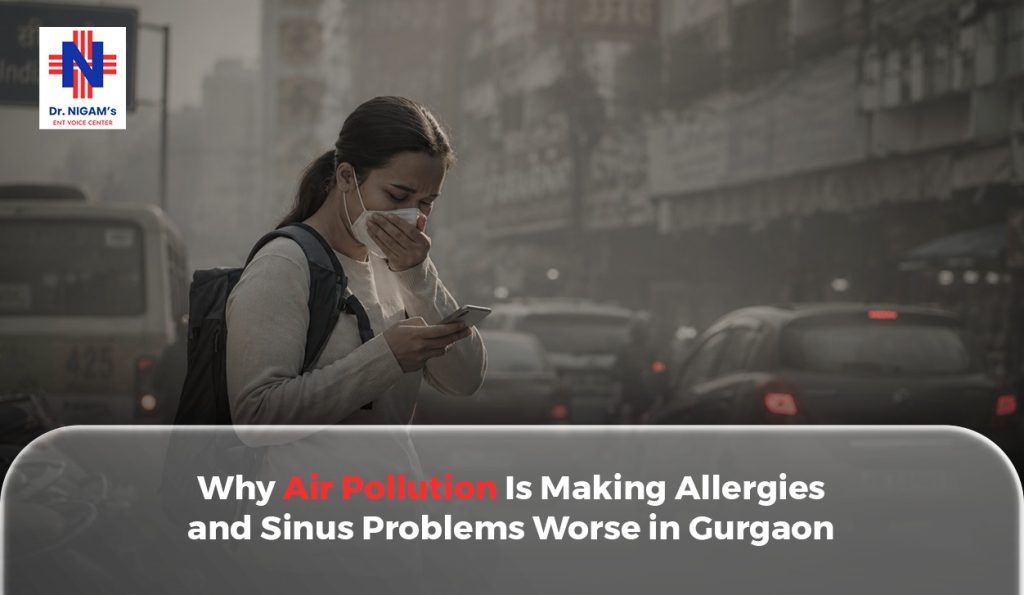
The residents of Gurgaon have been suffering from sneezing, running nose, pain in the face, reduced breathing capacity, etc. for a long time now, particularly during winter and early spring. Allergies and sinus infections tend to occur throughout the year, but many individuals report experiencing them more often and at a higher intensity. The culprit? Air pollution.
Air pollution is not just harmful to respiratory health; it’s also a direct trigger for allergies and sinus issues for thousands of residents, with the city’s Air Quality Index (AQI) frequently spiking into the “very poor” range (311–400).
How Air Pollution Affects Your Nose and Sinuses
Air pollution is a complex mix of particles, such as PM2.5 and PM10, which are tiny particles of dust, smoke, and chemicals that can penetrate deep into your lungs and even enter your bloodstream. Once these particles get into your nasal passages, they:
- Irritate nasal lining, leading to inflammation and swelling
- Cause allergic reactions in nonallergic individuals. Induce allergic reactions in nonallergic individuals.
- Damage the cells that make mucus, making it harder for your nose to filter out germs.
- Worsen existing sinus infections, making them last longer and become more painful
- Improve sensitivity to allergens such as pollen, dust, and mold.
Ozone (O₃) is one of the most harmful pollutants, as it is produced when vehicle and industrial emissions combine with sunlight. Ozone exposure results in coughing, heart palpitations, dyspnea (shortness of breath), and respiratory irritation and markedly exacerbates symptoms of sinusitis and asthma.
Why Gurgaon Residents Are More Affected
The residents of Gurgaon are particularly vulnerable due to specific pollution issues in the city:
- High vehicle density: Thousands of cars and two-wheelers emit exhaust every day.
- Industrial emissions: Toxic particles are emitted from many factories and construction sites.
- Waste burning: When big quantities of trash are burned, dioxins, carbon monoxide, and PM2.5 are released.
- Poor winter air circulation: Cold temperatures trap pollution near the ground
- Urban geography: Pollution cannot be easily dispersed with dense buildings
Exposure to high levels of air pollution over prolonged periods of time can aggravate pre-existing respiratory problems, irritate eyes and throat, and result in skin rashes, headaches, and fatigue. It can cause severe breathing distress, particularly in people with lung diseases, such as bronchitis, chronic obstructive pulmonary disease (COPD), and asthma.
Young people and children aren’t immune either. They have a higher likelihood of getting lung infections, lower lung function, and penetration of high levels of particulate matter into their lungs.
Symptoms of Pollution-Related Allergies and Sinus Issues
If pollution is worsening your condition, you might experience:
- Daytime allergies that last for more than a few days.
- A blocked or running nose that doesn’t get better with medicine.
- Pressure or pain in the face around the eyes and cheeks
- Post-nasal drip, which irritates the throat.
- Difficulty breathing or wheezing
- Itchy, watery eyes
- Reduced sense of smell
- Recurrent sinusitis that lasts for weeks.
All these symptoms begin gradually and then become persistent when you don’t correct the problem, which is constant exposure to dirty air.
Tips on How to Avoid Pollution Allergies
You can’t control outdoor pollution, but you can try to limit its effects:
1. Wear N95 Masks Outdoors
N95 masks filter 95% of harmful particles, such as PM2.5 and PM10. Always wear it when moving out of the house, particularly in the mornings and evenings when pollution levels are highest.
2. Use Indoor Air Purifiers
A good air purifier with HEPA filters will filter out pollutants in your home and office, providing a cleaner breathing environment.
3. Reduce outdoor activities in peak hours
Try to stay in during rush hours (6-10 AM and 6-9 PM).
4. Stay Hydrated
Increased fluid intake eliminates toxins and decreases symptoms of the respiratory system.
5. Avoid opening windows on high-pollution days
If AQI levels exceed 200, keep windows and doors closed to keep polluted air out.
6. Use Allergy-Preventing Nasal Sprays
Nasal sprays containing corticosteroids (cortisone) can help stop inflammation and allergic responses that can be caused by pollution.
When to See an ENT Specialist in Gurgaon
If your allergy or sinus symptoms did not improve within 2-3 weeks at home or if you suffered from frequent sinus infections, facial pain, or breathing difficulties, seek the guidance of a qualified ENT specialist in Gurgaon for correct diagnosis and treatment.
Dr. Kunal Nigam is a renowned ENT doctor in Gurgaon who provides complete sinusitis treatment, nasal allergy treatment, and treatment for pollution-induced respiratory issues at Dr. Nigam’s clinic.
His clinic offers the latest diagnostic technology, including:
- Allergy testing and assessment via the nose.
- Sinus CT scans for accurate diagnosis
- Sinusitis treatment in Gurgaon tailored to your condition
- Personalized prevention and management plans
- Dr. Nigam recommends the following treatments for the nasal allergy:
- Antihistamines and nasal corticosteroid sprays
- Short-term relief medications to help with congestions.
- Immunotherapy (allergy shots) for long-term solutions
- Lifestyle and environmental advice to minimise exposure
The best ENT specialist in Gurgaon is one who is equipped with the latest medical knowledge and modern diagnostic techniques and provides for a personalized approach to patient treatment, which is exactly what the clinic of Dr. Kunal Nigam offers.
Conclusions: Pollution is a health risk that should not be ignored. nored
Air pollution is not only unpleasant; it is hazardous to health, aggravates allergies, causes sinus infections, and lowers lung capacity over time. The residents of Gurgaon must be proactive in protecting themselves and getting medical treatment in case the symptoms become chronic.
Adopting these measures, such as wearing masks, using air purifiers, staying indoors, and ensuring you get sinusitis treatment in Gurgaon from an ENT specialist in Gurgaon, you can help manage your symptoms and avoid long-term complications from your sinusitis.
Also Read: Can Headphones Cause Hearing Loss? Facts Every User Should Know
Frequently Asked Questions
- Is it really air pollution that causes sinusitis?
Yes. Air pollution can irritate the nose, lead to inflammation, and increase the likelihood of sinus infection. Exposure to PM2.5 for a prolonged period of time can enhance the risk of chronic sinusitis and allergic rhinitis.
- What AQI level is dangerous for people with allergies?
If AQI is 200 or higher (“poor” to “very poor”), allergy and sinus symptoms are greatly aggravated. The residents of Gurgaon are exposed to a high risk of air pollution regularly, as the AQI is always above 260-310.
- What are the treatment options for nasal allergies caused by pollution?
Treatment involves nasal corticosteroid sprays, antihistamines, decongestants, and using air purifiers in the house. In case of long-term relief, seek advice from an ENT specialist in Gurgaon concerning nasal allergy treatment.
- When should I go to the doctor for sinus issues?
If sinus symptoms do not subside after 2-3 weeks or if there is facial pain, fever, or issues with breathing, then opt for sinusitis treatment in Gurgaon by Dr. Kunal Nigam in his clinic, dr.nigamsclinic.